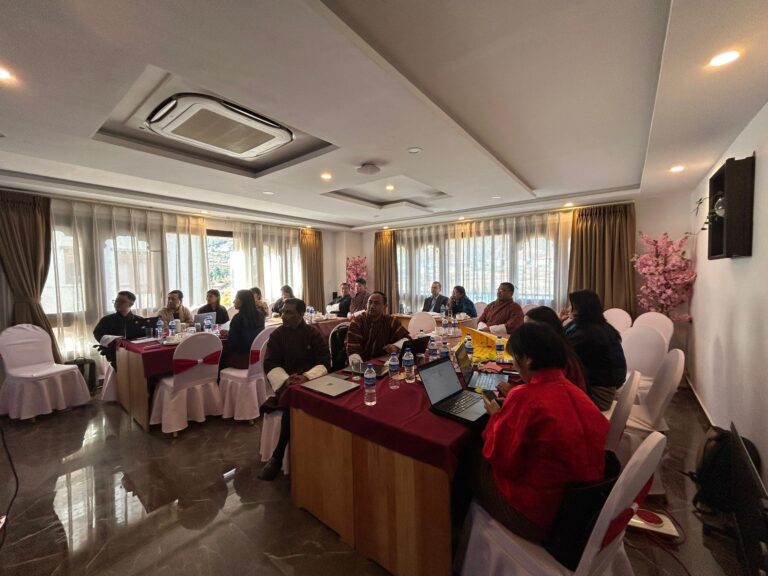
The Bhutan Innovation Lab (BIL) has successfully completed a Strategic Diagnostic of Bhutan’s Tourism Sector and submitted its comprehensive Strategic Advice Note, along with 18 supporting analytical sub-reports, to the MoICE Minister and the Department of Tourism, to be included in their 2026 Annual Deliverables.
The submission provided evidence-based recommendations to support Bhutan’s long-term tourism development by examining and addressing structural tensions within the current tourism strategy.
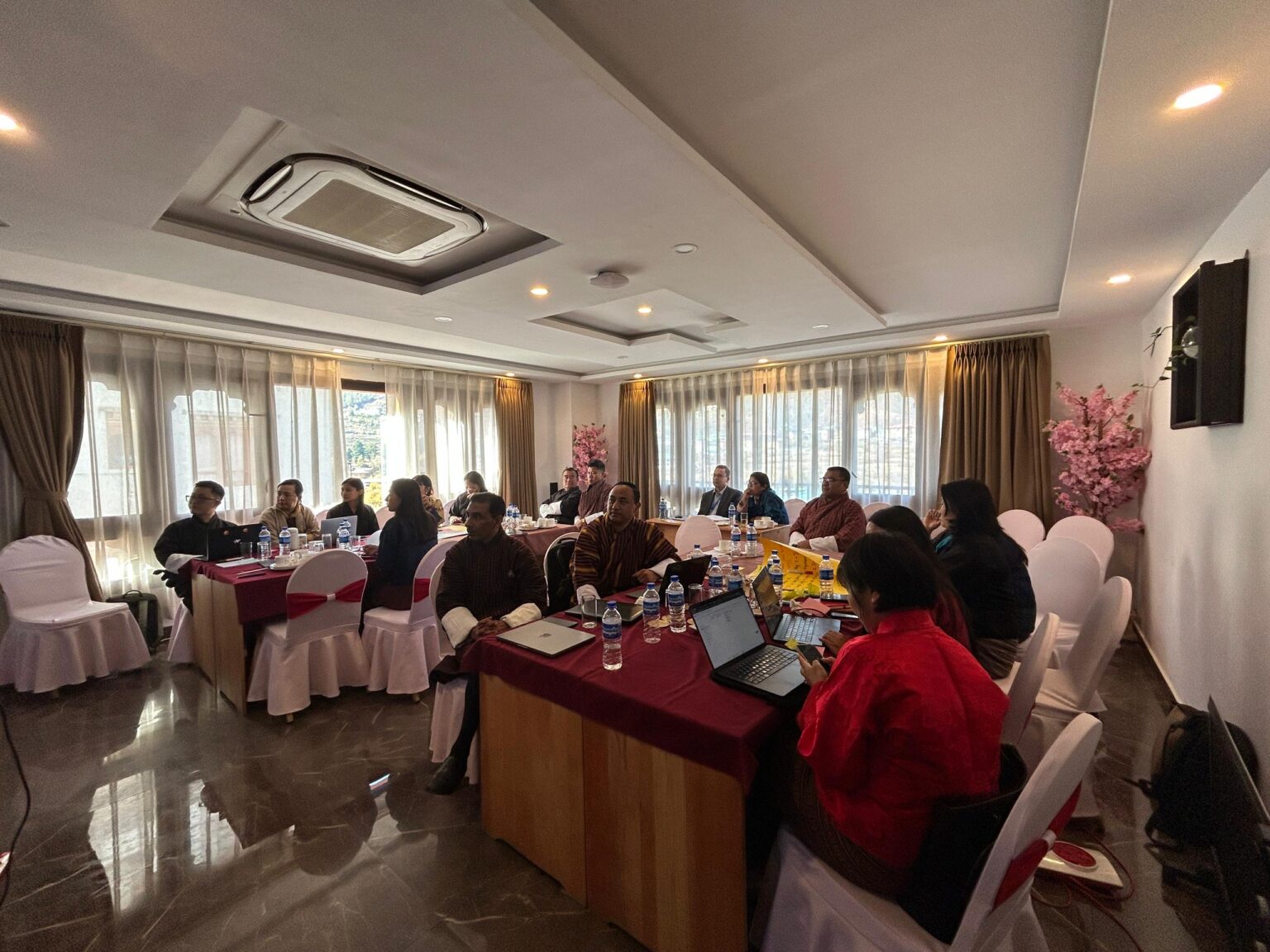
Conducted between May and June 2025, the diagnostic exercise applied advanced analytical methods, stakeholder consultations, economic modelling, and global benchmarking to assess Bhutan’s tourism performance, policy alignment, and sector resilience. The exercise examined key sector challenges including seasonality, regional concentration of tourism benefits, market positioning, governance coordination, and hotel sector sustainability.
How healthy is Bhutan’s tourism sector?
On the surface, the “problem” appears straightforward: Bhutan needs to increase its tourist visitor numbers. Hotels are underutilised and carrying a heavy debt burden, Bhutanese Tour Operators are outcompeted and sometimes undercut by International Tour Operators, and some international flight routes are chronically under capacity. BIL deployed a “systems lens” to explore this story. First, that it does not account fully for the global renown of Bhutan’s tourism sector, the basis for its future flourishing. Second, that it does not recognise several long-standing, systemic barriers, which drive the surface-level issues, such as a lack of regional diversity, the harms of seasonality, the concentration of tourists in three districts, and the low redistribution of tourism benefits.
Tourist arrivals up 38% in 2025; in June 2025, BIL projected 190,000 to 210,000 visitors by December 2025. Official reporting later confirmed arrivals of approximately 209,000 visitors, reflecting continued post-pandemic recovery, though BIL emphasized that a concentration on arrivals alone, and not spending pattern, travel behaviour, will be misleading for policymakers.
On average, tourists originating beyond India spend $462 USD per day, yet, their current absolute numbers are at least 30% lower than pre-pandemic levels.
Returning to 300,000 visitors without increasing length of stay and diversity and depth of experiences will not meet Bhutan’s rolling 10-15% GDP target contribution from tourism. Based on current spending patterns and diversity, Bhutan would need 450,000 arrivals by 2029 to meet this GDP-contribution target ($550m USD).
Bhutan retains 70 percent of every tourist dollar within the domestic economy, primarily through wages and profit in local hotels, homestays, guides, transport, restaurants and craft producers, highlighting the sector’s high in-country economic impact and the importance of targeting high-value, low-leakage experiences.
Evidence based planning and targeted support for hotel stocks are essential, as Bhutan has 4.9 million bed-nights, but only 11% average monthly occupancy in 2024, combined with seasonal flight disruptions (50%+ cancellations to Yongphula in summer 2024) and uneven regional readiness, these factors create significant risks to the long-term sector growth. Strengthening the relationship between hotel number and type and real market demand is vital, to course correct the potentially inflated sector.

What has happened and what needs to change?
At heart, BIL found the most significant systemic factor to be coherent governance and integrated governance, which has led to an interacting set of issues, such as:
MISALIGNMENT between policy and reality, especially in relation to the current hotel stock, which does not fully match target tourists, Bhutan’s tourism identity, and Bhutan’s long-term ambition as stated in the “2024-2034 Integrated Tourism Masterplan” (2025).
POLICY VOLATILITY where changes to the core tenets of tourism policy – SDF, HVLV – dating at least back to 2008-10, risk dampening private sector confidence in a sector that requires stability for long-lead-time, slower-return investments e.g. infrastructure.
NARROW OFFER and a LACK OF PRIORITISATION, where the diversity of Bhutan’s tourism offer remains too restricted for its growth ambitions, and investment attraction, but proposed solutions are too often those with steep up-front funding costs, inappropriate given reduced fiscal space, and insufficiently tied to a clear understanding of who Bhutan seeks to attract.
UNDER RESOURCING of critical sector functions such as data analysis, marketing, and regulatory enforcement, where the current whole-of-economy expectations of the Department of Tourism (DoTr) overmatch its capacity to deliver it; where personnel, budget, and convening power do not fully match the scale of the national mission for which it is responsible.
36 Strategic Recommendations Across Four Core Priority Areas
Based on its findings, BIL developed 36 data-driven, timed, costed, and sequenced recommendations structured under four core strategic priority areas aimed at strengthening Bhutan’s tourism sector and enhancing its contribution to economic growth while maintaining environmental, cultural, and social sustainability.
Governance
Strengthen cross-sector coordination and strategic oversight mechanisms to ensure tourism development is aligned with national economic, cultural, environmental, and infrastructure priorities. These recommendations emphasise improving data capability, resource allocation, including specific tourism-related ploughback mechanisms from the SDF (4-5% ringfenced), and delivery coordination across relevant agencies.
Strategic Coherence
Align tourism growth targets with Bhutan’s GNH values and HVLV tourism model. The recommendations encourage quality-driven growth by prioritising visitor composition, value generation, and long-term sector sustainability rather than relying primarily on increasing visitor numbers.
Market Segmentation
Strengthen targeted visitor segmentation strategies to better identify and attract high-value, values-aligned tourist segments, improving marketing effectiveness, visitor experience quality, and tourism revenue generation.
Market Offer Development
Strategically expand and strengthen Bhutan’s tourism products and experiences, particularly through locally rooted tourism activities, intangible cultural heritage experiences, and community-based tourism offerings that enhance visitor engagement, length of stay, and domestic economic value retention.
Next Steps
BIL has submitted the full Strategic Advice Note and supporting analytical reports to the Department of Tourism and relevant stakeholders for review and consideration. The findings and recommendations are intended to support evidence-based policy refinement and are being translated into Annual Deliverables for the Ministry, in order to strengthen sector governance and guide Bhutan’s tourism development towards sustainable, high-value growth.
Bhutan Innovation Lab remains committed to supporting innovation-driven policy design and collaborative solutions that strengthen Bhutan’s national development priorities.
Supporting Evidence and Analytical Work
The Strategic Advice Note is supported by 18 detailed analytical sub-reports developed through ten major investigative workstreams, including economic modelling, visitor behaviour analysis from a survey distributed on board all international flights in late May with the partnership of Drukair and Bhutan Airline, who kindly supported nationwide in-flight distribution, as well as, historical tourism trend assessments, global comparative market studies, sentiment analysis of international tourism feedback, and multi-sector stakeholder consultations.